Parma’s Piazza Duomo is of another time. It is empty of all modern comforts and technologies, missing even the awnings and tables of bars that line most Italian city piazze. One imagines hooded monks scurrying across the square to deal with urgent ecumenical business.
The sounds of the ghetto ring from a ragged man’s accordion. The musical mood he sets is of doom and desolation. The brickwork of the cathedral’s tower is unusually striped, with redder streaks piercing the skin-coloured bricks like lacerations from the whip. The Piazza continues to visit violence on you from the other side, where a bulky, swollen palazzo squares up to fight you. Women wearing flowers and veils trudge into the cathedral, heads dipped. Bumpy stones suffice as its floor, making it like walking on a riverbed or hot coals. Do not dash your foot against the stone.
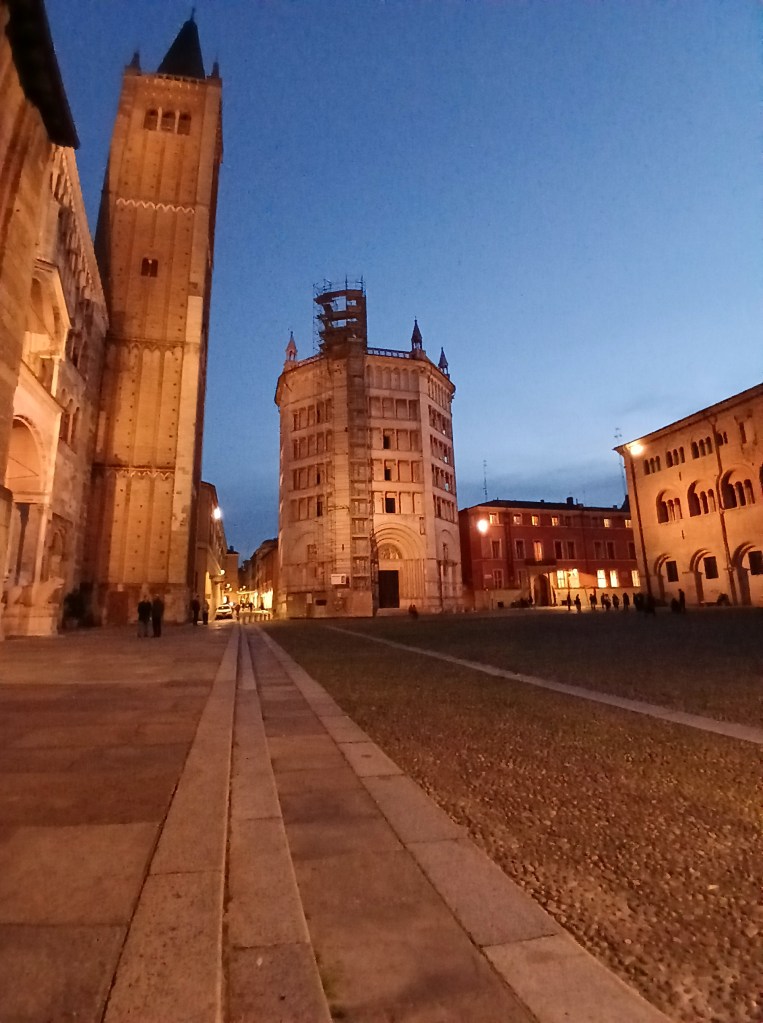
The pagoda-like tower of the battistero presents to the square a towering wall of balconies like an actor would see from an Elizabethan stage. Play to the balcony for your life, it says. These balconies are imposing and unreachable, leaving you exposed and scrutinised in the middle of the square, as though on trial before a menacing clergy lining the balconies of the towering jury box. They intimidate you beneath them on the rocky arena floor. You are baring all the sins of your soul to the hooded figures filling the strata of pulpits, their cascading effect like a helter-skelter illustrating the descent of your spirit under their glaring gaze. To one side, the palazzo acts as henchman and bailiff in this court.
This is the birthplace of Verdi, composer of Dies Irae, and the voices of the damned screaming from hell are heard in this square. Something of a divine visitation is hinted at here in the square as the cathedral displays a bunting advertising ‘la Madonna ritrovata‘. But when she is found again, and perhaps a more severe otherworldly figure along with her, they are not here to bring ascension, but instead to collect debts. God has been keeping receipts and the souls left in Piazza Duomo at nightfall will suffer the eternal flame.
Then shall with universal dread
the Book of Consciences be read
to judge the lives of all the dead.
For now before the Judge severe
all hidden things must plain appear;
no crime can pass unpunished here.
O what shall I, so guilty plead?
and who for me will intercede?
when even Saints shall comfort need?
 from the penumbra